Help My Toddler Talk
5 Reasons Your Toddler Isn't Talking Yet — And It's Not the Reason Everyone's Given You
So you stop drilling "can you say ball?" fifty times a day — and start one silly page instead. Here's what changes, in the next two minutes.
You bought the flashcards. The pretty first-words book with the giraffe on the cover. Maybe an app or two. Add it up — real money, gone — and he still only says mama, dada, then quiet.
He points. He follows every word. He's trying to get the words out. And the real reason he's stuck might be one nobody's named for you yet.
The one that changes everythingHe's not refusing to talk — nobody's handed him a word he could win.

You've done everything they tell a good mom to do.
You've watched him point at the dog and get it right. Watched him find his shoes the second you asked. He understands every word you say — which is somehow worse. The words are in there. Something is just stopping them from coming out.
Then Saturday, at the birthday party, your friend's little girl is narrating the whole room — twenty words, thirty. Yours points at the cake and grunts. You laugh it off at the table. You cry in the car.
Your pediatrician said wait and see. Your mother-in-law swears he's just a late-talking boy. Your husband keeps promising he'll catch up. Every one of them means it kindly — and not one of them is up at 11pm with you, counting. So you did the only thing left: you blamed the screens, then you blamed yourself.
Here's what none of them told you.
He tries all day. He looks right at you, opens his mouth — and nothing. That's not a kid who won't talk. That's a kid swinging at words that were never his size.
Open that pretty first-words book. Page one: "giraffe." "Rhinoceros." "Elephant." The company that printed it never watched a one-year-old try to talk — it picks words that photograph well on a cover, not words a baby can actually say. Your child's real first sounds never made the cut.
It was never him. And it was never you. It was a book built to sell, not to work.
Little lips can't say "rhinoceros." They can say "mama."

Say them out loud right now. "Mama" is just lips pressing together — m, m, m. He's already making that sound when he isn't even trying.
Now "rhinoceros." That's the "r" sound — one of the last to arrive, usually not until around age 6. Same book, same page, two words a lifetime apart for a two-year-old. Feel it in your own mouth, then watch which one he hands you first.
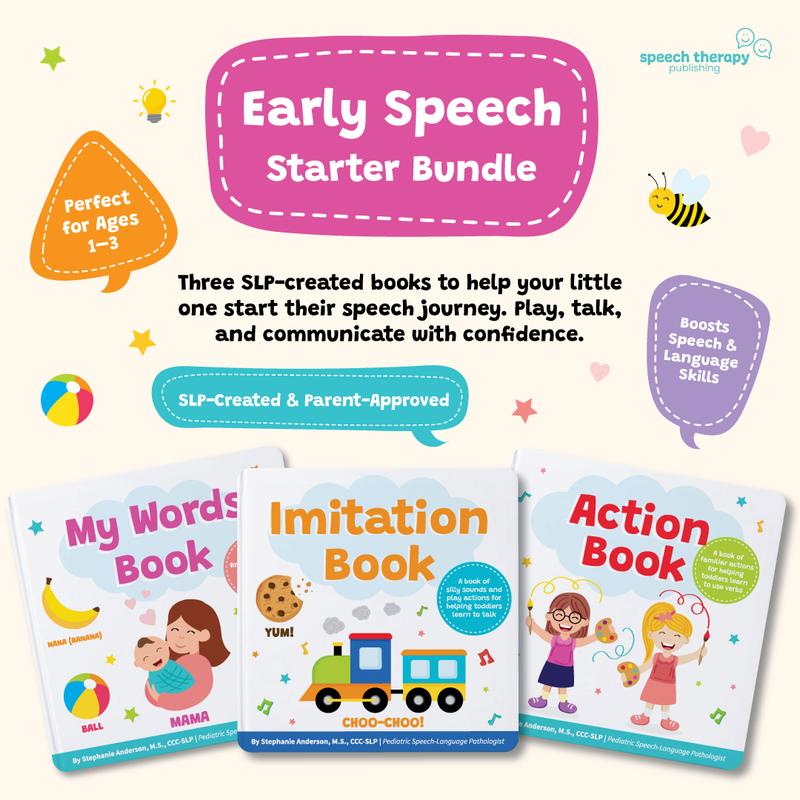
m, b, p, and d are the sounds nearly every child forms first — not because his mouth is broken, but because that's how little mouths come online. A speech-language pathologist built these three books in that order on purpose: copy first (Imitation), then easy words (My Words), then doing-words (Action). The pretty books ignore it. This one is built on nothing else. Day one, a little "ba" or a "moo" comes back at you. Small. But it comes — because for the first time, you asked him for something he already had.
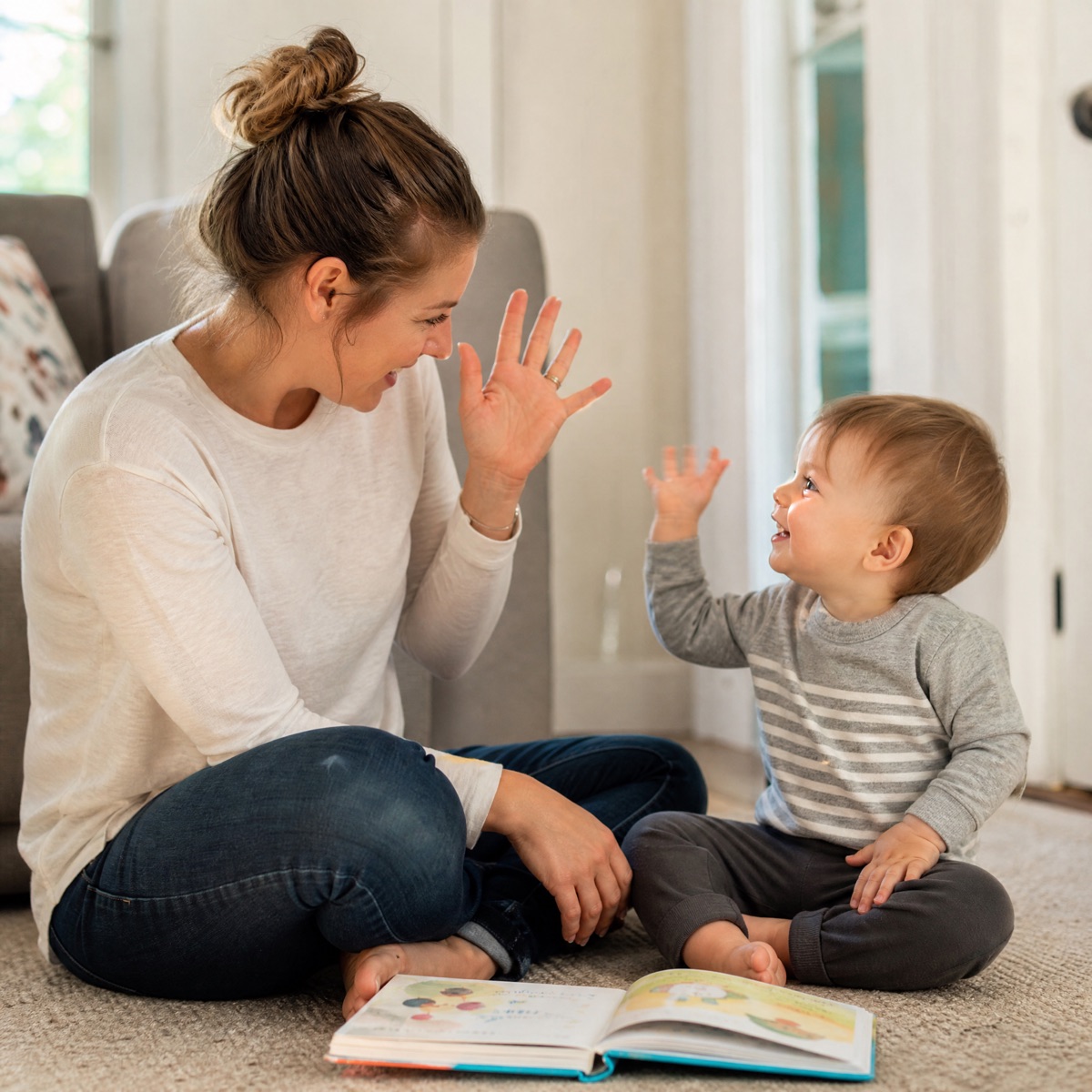
Right now, he's practicing silence.
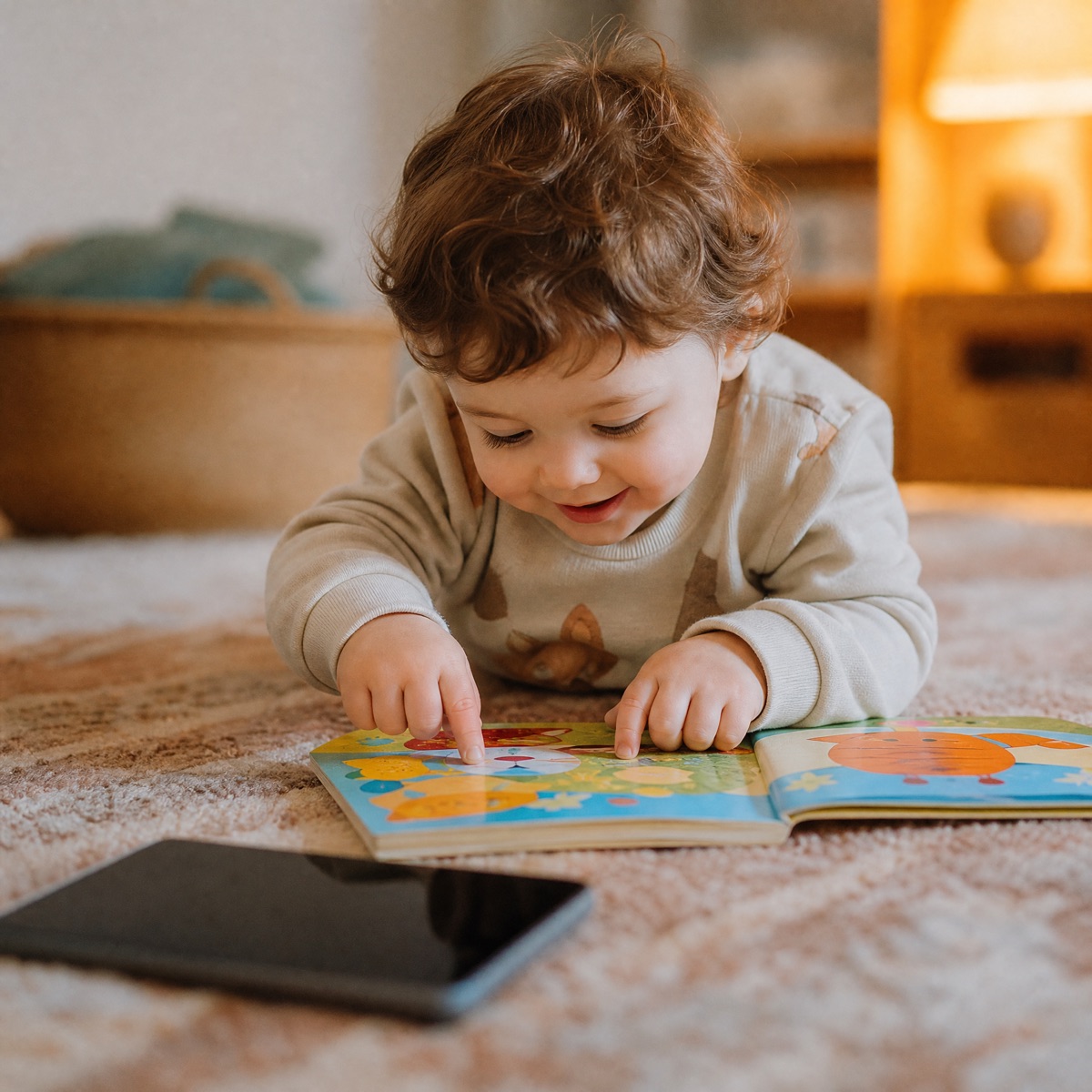
Kids get good at whatever they practice. A toddler who reaches and points and grunts gets very good at reaching and pointing and grunting. It works — you hand him the cup, he got what he needed, and the system he's running got a little more permanent.
Every quiet month, the workaround gets a little more automatic.
That's the part that sits under the 11pm chart, and you've probably never said it out loud: you can feel the months slipping, and nothing anyone's handed you has reached him.
So you flip it. You hand him a sound he can already make, and he wins on page one. Then page two. Small wins stack — and none of it is on him; nobody ever handed him an easier word to reach for. The words follow the wins, not the other way around — and the wins start the second you know what to say to get one.
Bedtime stops being the part you dread.
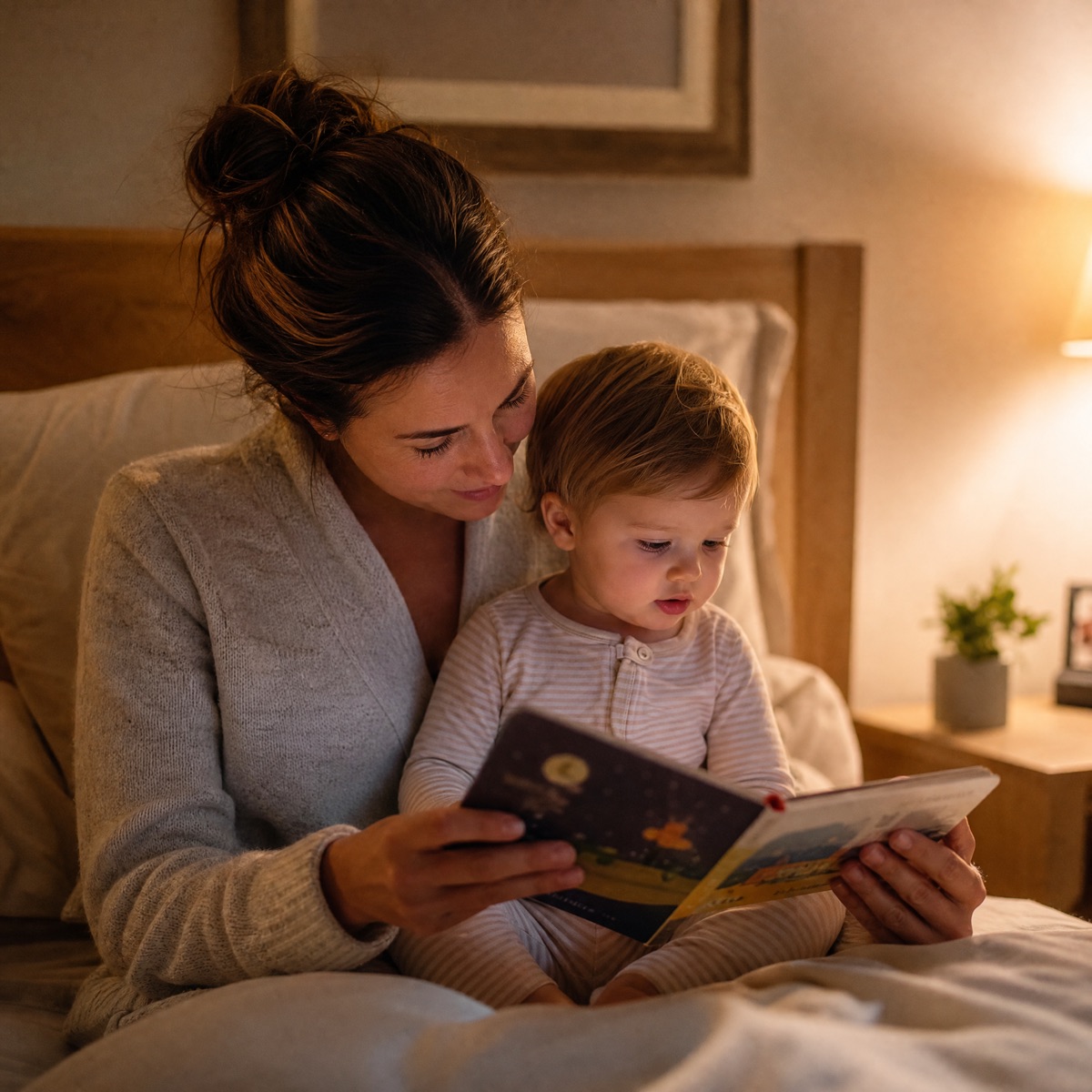
Every page hands you the words — you don't guess at any of it. It tells you the word, when to pause, and how to get him copying. You read it, he copies. Ten minutes at bedtime, on the floor, in the car.
He leans in to copy the sound. You catch the little "ba" come back. Tomorrow he beats you to the page — and the ten minutes you used to dread turns into the part you both look forward to.
You become the mom who didn't just wait.
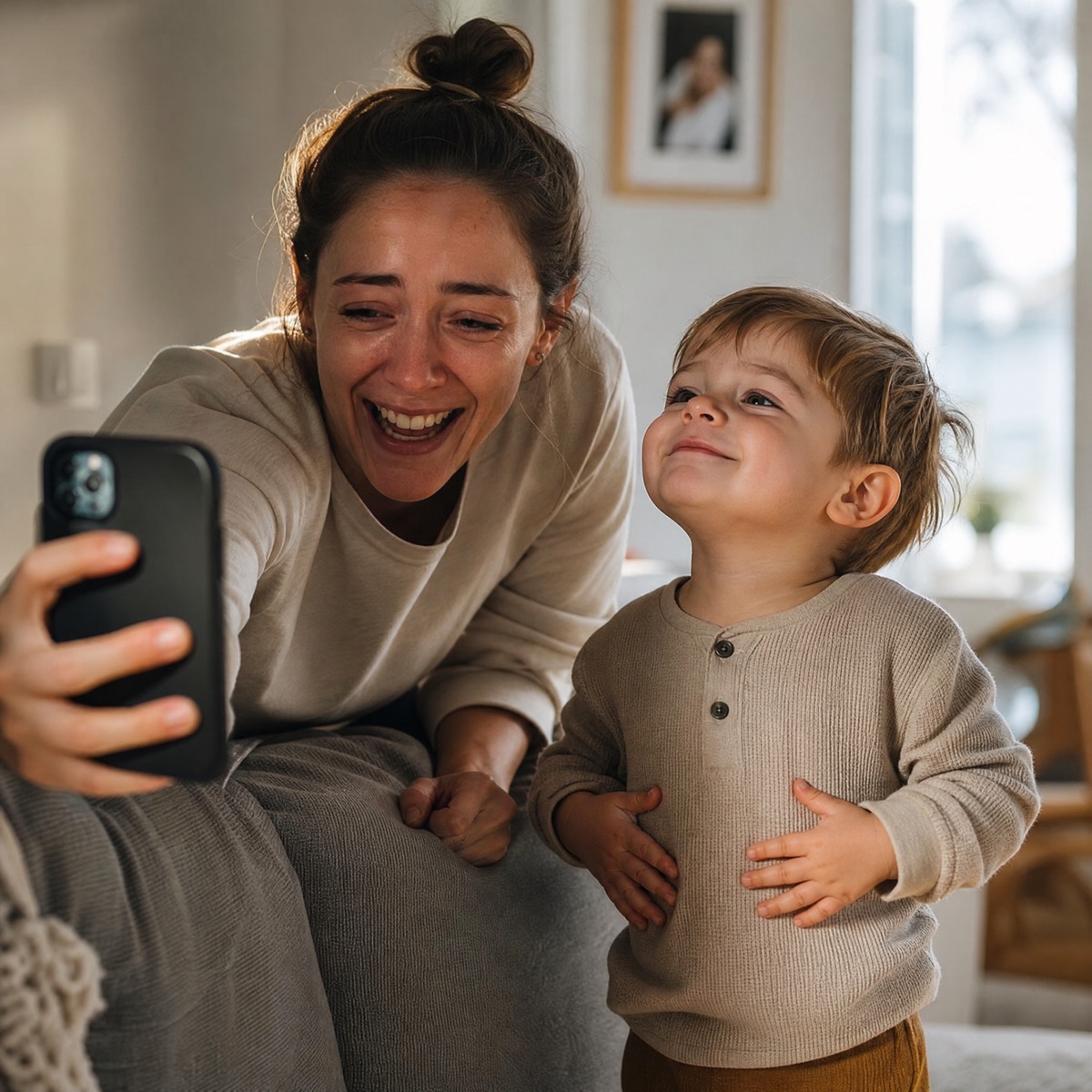
Picture the moment. He looks up from the page and a brand-new word comes back at you — clear, on purpose, aimed right at you. You grab your phone. And under the happy panic, you feel it: you didn't sit and hope this would sort itself out. You picked up three little books and did the ten minutes, night after night. That's the mom he got. That's the video you send tonight — and this time, you don't open the milestone chart. You just smile.
Before you decideHere's everything else you were probably going to try.
Early Intervention. Do it — call today, it's free, and it's the right call. But getting seen can take 45 days on paper and months in real life. This is what you do at your own kitchen table while you wait.
A private speech therapist. Worth it if you can swing it — but it's $100 to $250 for one hour, and it's one hour. This is the ten minutes you get every other night of the week.
The apps. He taps through them. He skips the talking part. You know he does.
Waiting. Maybe he catches up on his own. But waiting is the one choice that leaves him swinging at the same words that were never his size — when ten minutes tonight just hands him easier ones.
Is it actually any good?Worried it's cheap AI junk like the rest? It's the opposite.
You've seen the $30 "learning" books from some random ad — thin, lifeless, churned out by a machine. This is the opposite. All three board books were written by a licensed, ASHA-certified pediatric speech-language pathologist — Stephanie Anderson, M.S., CCC-SLP — with her step-by-step directions printed inside every cover, in her own words.
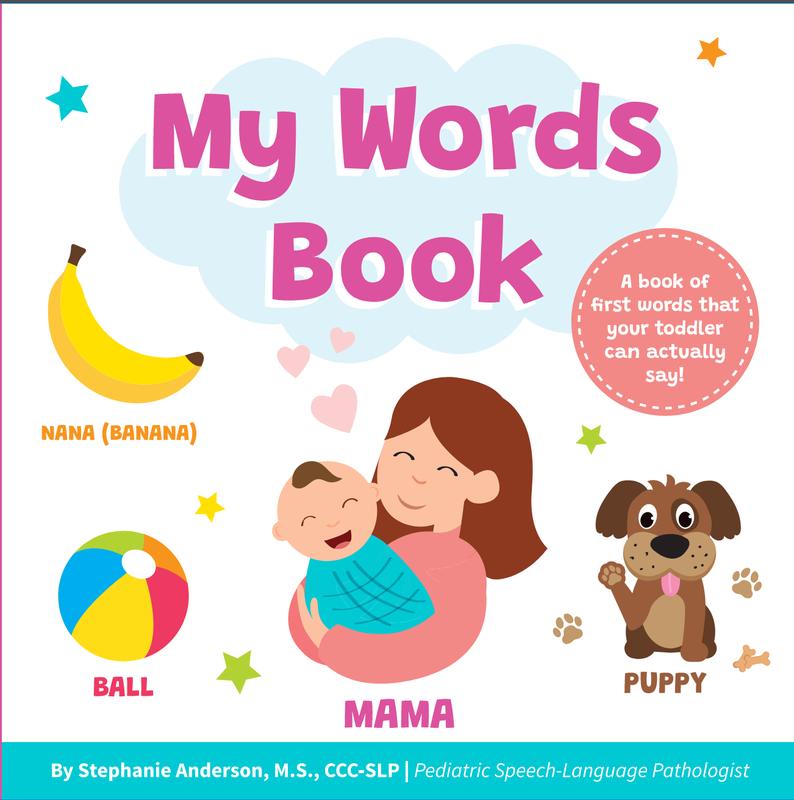
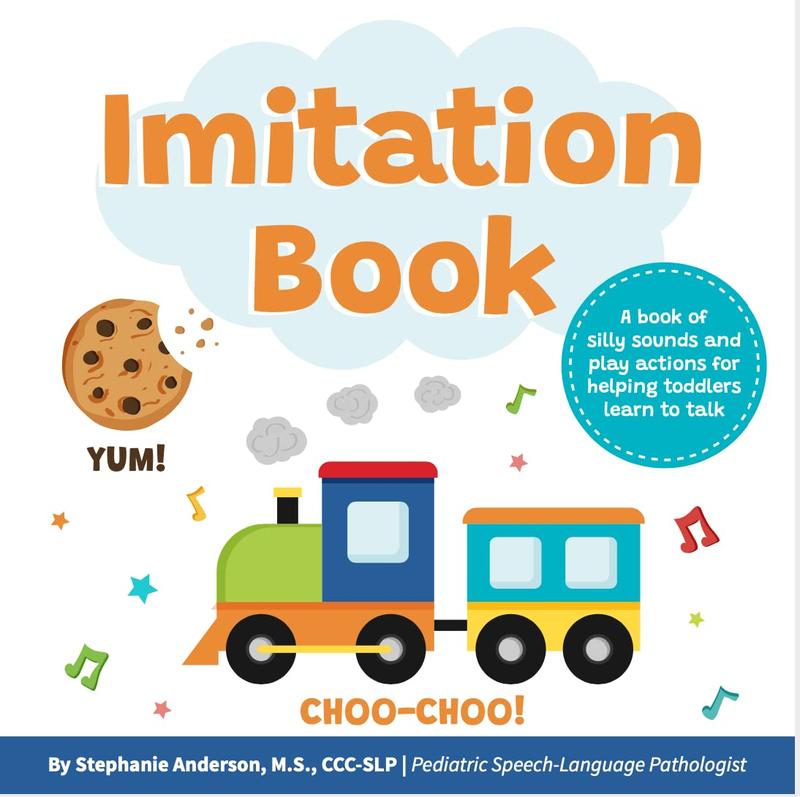
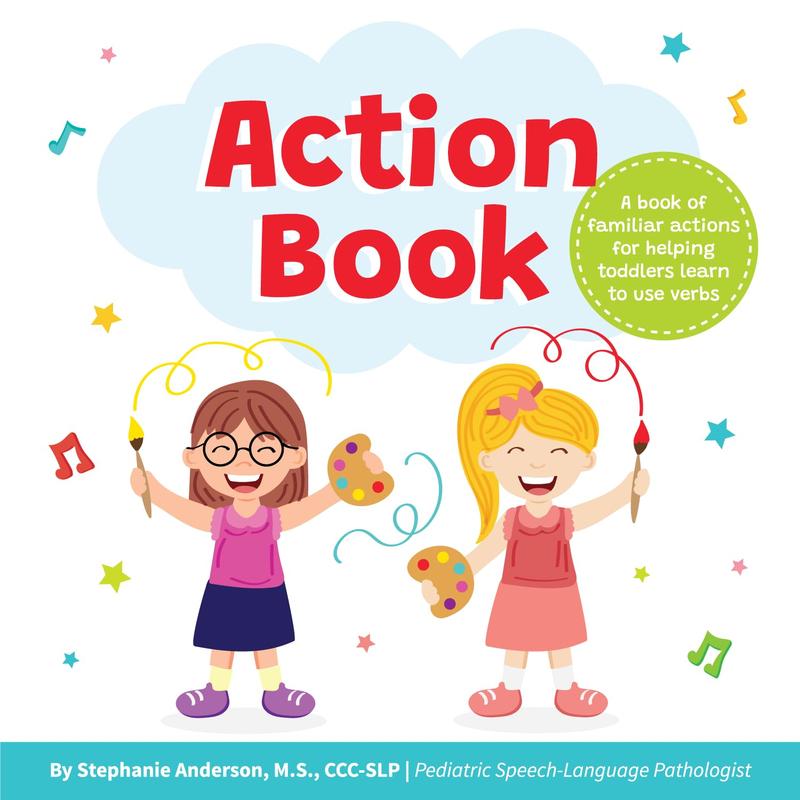
Three real board books, built for toddler hands, in the order kids learn to talk — Imitation first, then My Words, then Action. What you see is what ships. You've got 30 days to change your mind — and you keep every word that came out in the meantime.
And if his quiet has you worried, please get him evaluated — this was never built to replace a speech-language pathologist. It's the easy, no-pressure reps you can start at your own kitchen table tonight, right alongside their help.
First Words Bundle — 3 SLP Toddler Speech Books
A word his size on page one — not a rhinoceros. One therapy hour costs more than all three books.
Before you overthink it
Yes. It's made for ages 1 to 3. You start where he is — the easy sounds first — and the books grow with him, month after month.
You don't have to be. You teach nothing. The directions are printed inside every cover and each page tells you what to say. You read it, he copies. That's the whole game.
No. Any mom who tells you a book replaces a therapist is lying to you. These are the easy reps you do at home — support, never a substitute. If his quiet worries you, see your pediatrician or a speech-language pathologist. This sits right alongside their help, never instead of it.
You get 30 days. If a new sound never comes out at your table, send it back for a full refund.