


This is NOT a Sketchbook. It's an Art Class!
This is NOT a Sketchbook. It's an Art Class!
💡 Makes money easy to understand
💰 Teaches real-world money skills
🎨 Fun, visual & made for kids
Couldn't load pickup availability
An interactive workbook for the aspiring artist — best for ages 30 to 99+.
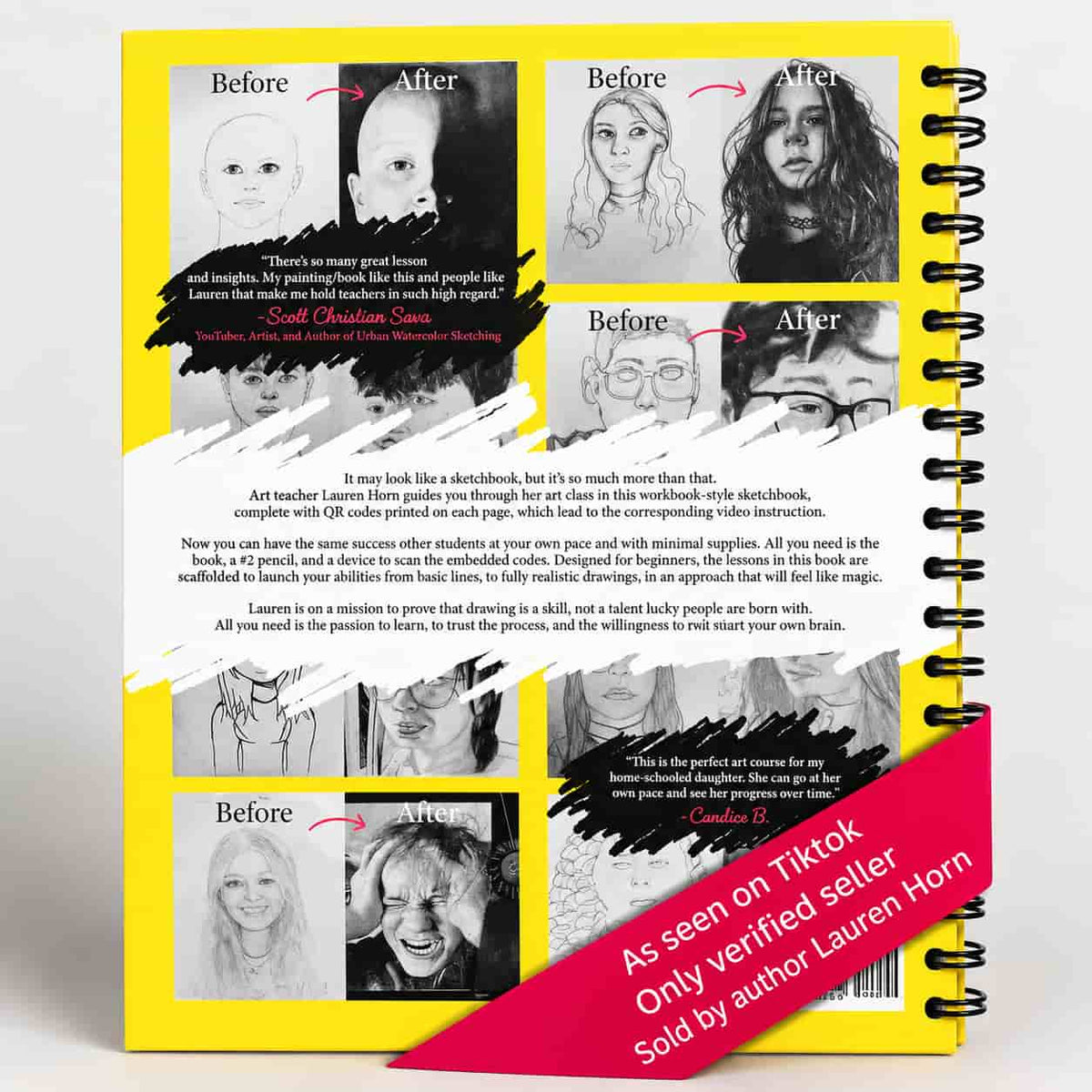
It may look like a sketchbook, but it's so much more than that. Art teacher Lauren Horn guides you through her art class in this workbook-style sketchbook, complete with QR codes printed on each page that lead to the corresponding video instruction.
Now you can have the same success as her students, at your own pace and with minimal supplies. All you need is the book, a #2 pencil, and a device to scan the embedded codes.
- Designed for beginners — lessons are scaffolded from basic lines to fully realistic drawings
- QR code on every page links to step-by-step video instruction
- Perfect for homeschool, self-study, or gifting to a budding artist
- Real before-and-after student results that feel like magic
Lauren is on a mission to prove that drawing is a skill, not a talent lucky people are born with. All you need is the passion to learn, to trust the process, and the willingness to outsmart your own brain.


Customer Reviews

Money Shouldn't Feel This Confusing
Most kids hear words like banks, inflation, investing and markets without anyone stopping to explain what they actually mean.
The problem isn't that money is too complicated. It's that it's usually explained with boring words, confusing definitions and zero context.
How Money Actually Works breaks 50 big questions down into simple explanations and colorful visuals kids can actually follow.
See The Results
96%
Said money concepts became easier for their child to understand.
94%
Said their child became more interested in learning about money.
91%
Said they would recommend it to other parents.
All results are derived using data from over 14,806+ orders & are collected within 60 days.
Why This Is Different
| This Book | Others | |
|---|---|---|
| Visual & Engaging | ||
| Real Economics, Made Simple | ||
| Skills They’ll Actually Use |
More Reviews
Frequently Asked Questions
What is How Money Actually Works?
What is How Money Actually Works?
A full-color guide that teaches kids how money, banks, investing, inflation, markets and economics actually work — without confusing jargon.
How do you use it?
How do you use it?
Kids can read it independently or with a parent. Pick a question, open the page and learn one concept at a time.
When will they start understanding it?
When will they start understanding it?
Kids can begin learning new concepts from the first read. Building strong financial knowledge comes from continuing to read, ask questions and apply what they learn.
Who can use it?
Who can use it?
It's designed primarily for curious kids ages 8–12, and works great for parents, families and at-home learning too.